


Choisir le bon adhésif en toute simplicité – selon le matériau, l’application et les contraintes
Pour trouver le bon adhésif, il ne faut pas commencer par rechercher un produit par son nom, mais par identifier l’exigence à laquelle il doit répondre. Un adhésif est adapté lorsqu’il convient aux matériaux, aux contraintes et aux conditions de mise en œuvre. Qu’il s’agisse de métal, de plastique, de bois, de verre, de céramique ou de caoutchouc, les mêmes questions sont toujours essentielles pour réaliser un collage résistant:

• Quels matériaux doivent être assemblés ?
• Quelle est la taille de la surface de collage et quelle est la largeur du jeu ?
• Quelles forces s’exerceront sur l’assemblage en service ?
• À quelle vitesse l’adhésif doit-il fixer ou durcir ?
• Quelles températures et quelles influences environnementales la liaison devra-t-elle supporter ?
En vérifiant systématiquement ces différents points, vous trouverez beaucoup plus rapidement l’adhésif adapté.
Pourquoi coller ?
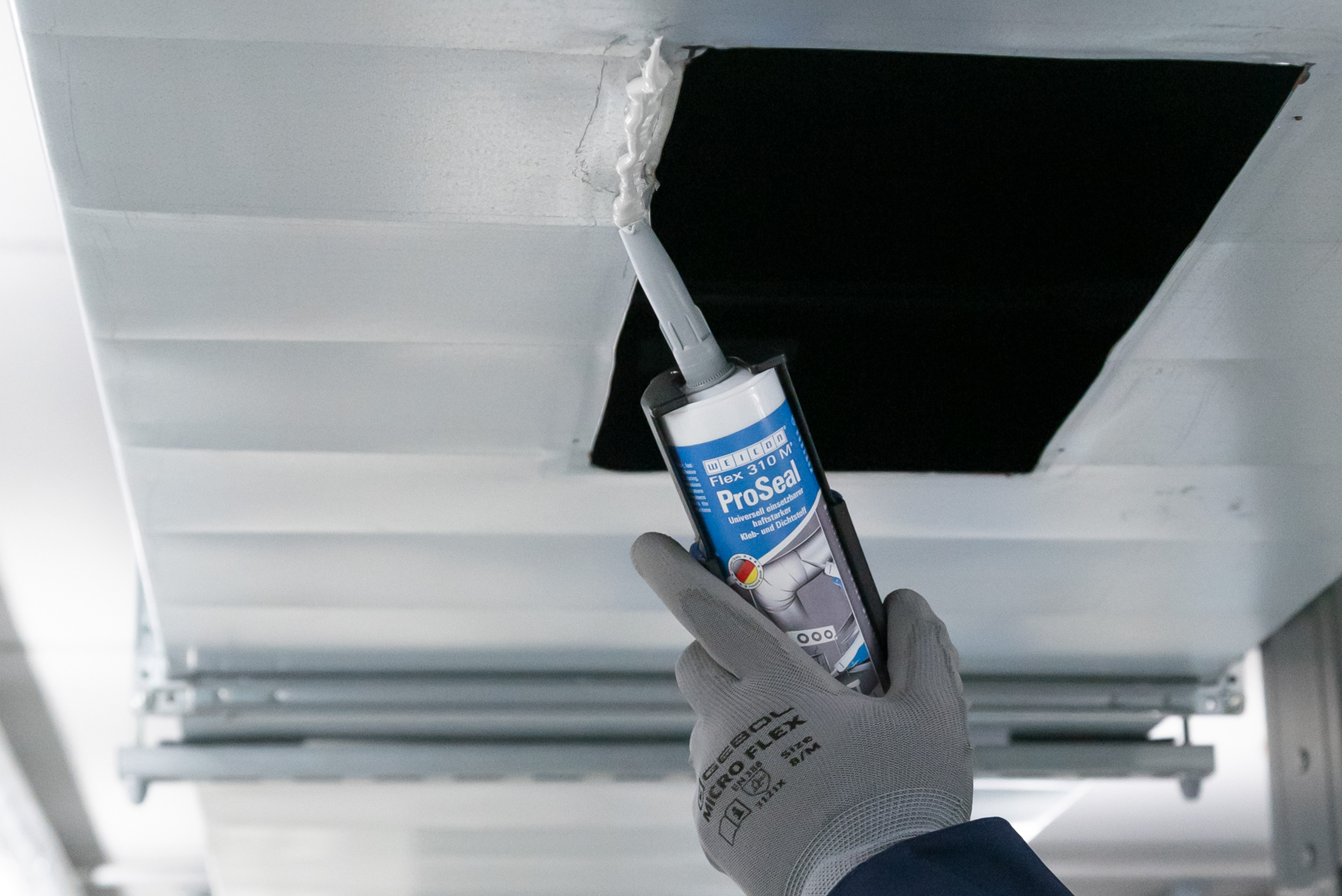
1. Variété
Le collage permet de relier une grande variété de matériaux – qu’il s’agisse de métal, plastique, bois, verre, céramique ou papier – et ce, tant entre eux qu’avec d’autres matériaux.
2. Poids
L'adhésif est, contrairement aux vis par exemple, très léger. L'utilisation d'adhésifs permet donc de réduire considérablement le poids des éléments à assembler.
3. Préservation des matériaux
Lors du collage, la surface n'est ni modifiée ni déformée, contrairement à ce qui se passe, par exemple, lors des fortes températures utilisées dans le soudage.
4. Esthétique
Il est également recommandé d'utiliser des adhésifs pour des raisons esthétiques. En particulier, les adhésifs transparents permettent de créer des assemblages invisibles.
5. Charge
Le collage permet d'obtenir une transmission de force plus uniforme. Avec les rivets ou les vis, on obtient des charges ponctuelles.
6. Étanchéité
Un excellent effet secondaire de certains adhésifs est leur capacité à amortir et à assurer l'étanchéité des joints.
7. Dosage
Les adhésifs peuvent être facilement dosés et appliqués de manière ciblée. Parfois, quelques gouttes suffisent pour obtenir des connexions très solides.
8. Équipement
Le collage peut presque toujours être effectué n'importe où et à tout moment. Aucune machine ou outil coûteux n'est nécessaire.
9. Réparation
Particulièrement en matière de durabilité, les adhésifs sont un excellent soutien, car ils permettent de réparer des objets plutôt que de les jeter.
10. Coût
Grâce à la faible consommation de matériaux, à une application rapide et à l’aspect écologique, les adhésifs permettent d'économiser du temps et de l'argent.
Trouver le bon adhésif:
Les 5 critères de sélection les plus importants

1. Quels matériaux doivent être collés ?
Le type de matériau constitue la première étape et le critère le plus important dans le choix de l’adhésif. Tous les adhésifs n’adhèrent pas aussi bien à toutes les surfaces. Questions typiques:
• Faut-il coller du métal sur du métal ?
• S’agit-il de coller du plastique sur du plastique ?
• Faut-il assembler des matériaux différents, comme le métal et le caoutchouc ?
• S’agit-il de plastiques difficiles à coller, tels que le PE, le PP ou le PTFE ?
Important : En particulier pour les plastiques, ce n’est pas seulement le type de matériau qui est déterminant, mais aussi l’énergie de surface. Certains plastiques se collent très bien, tandis que d’autres nécessitent des systèmes spécialement adaptés ou un prétraitement.
À retenir : Plus le matériau est précisément identifié, plus il est facile de choisir l’adhésif adapté.

2. Quelle est la taille de la surface de collage et quelle est la largeur du jeu ?
Tous les collages ne constituent pas un assemblage sur une surface plane. Parfois, les pièces s’ajustent parfaitement l’une à l’autre ; dans d’autres cas, il faut compenser les irrégularités ou combler un jeu. Les points essentiels : Les petites surfaces de collage parfaitement ajustées nécessitent souvent des adhésifs différents de ceux utilisés pour les grandes surfaces, les surfaces irrégulières ou les applications nécessitant de combler un jeu.
En principe :
• Pour les joints de collage très fins, les adhésifs à faible viscosité sont souvent les mieux adaptés.
• Pour les pièces irrégulières ou les jeux plus importants, il est préférable d’utiliser des adhésifs pâteux ou capables de combler les jeux.
UTILITÉ PRATIQUE: En évaluant correctement le jeu et la surface de collage, on évite les problèmes typiques tels qu’un mouillage incomplet, une résistance insuffisante ou une consommation excessive d’adhésif.

3. Quelles contraintes l’assemblage collé doit-il supporter ?
Le choix du bon adhésif dépend fortement des contraintes auxquelles l’assemblage sera soumis par la suite. Les principaux types de contraintes sont:
• raction
• Cisaillement
• Charges d’impact et de choc
• Vibrations
• Pelage
• Charges permanentes ou alternées
Il convient également de déterminer si l’assemblage:
• doit être rigide ou plutôt flexible,
• doit présenter une résistance finale élevée,
• ou doit plutôt avoir un effet amortissant et compenser les mouvements.
Règle générale: Un bon assemblage collé n’est pas seulement résistant, il doit également être conçu en fonction des contraintes réelles auxquelles il est soumis.

4. Quelles températures et quelles influences environnementales la liaison devra-t-elle supporter ?
Un adhésif ne garantit une tenue durable que s’il est également adapté aux conditions d’utilisation. Les facteurs déterminants sont notamment:
• Froid ou chaleur
• Humidité
• Eau
• Rayons UV
• Produits chimiques
• Huiles
• Produits de nettoyage
• Exposition aux intempéries
C’est un point particulièrement important dans les ateliers, le montage, la maintenance et l’industrie. Un assemblage collé peut fonctionner de manière fiable en intérieur, mais répondre à des exigences très différentes en extérieur ou en cas de contact avec des fluides. C’est pourquoi il est important de: Le bon adhésif est aussi celui qui est adapté à son environnement d’utilisation.

De combien de temps dispose-t-on pour la mise en œuvre et le durcissement ?
Dans de nombreuses applications, ce n’est pas seulement la résistance finale qui est déterminante, mais aussi le temps de mise en œuvre. Points à prendre en compte:
• Dans quel délai les pièces doivent-elles être fixées?
• Faut-il disposer de suffisamment de temps pour positionner les pièces ?
• Une prise rapide est-elle importante?
• Quand l’assemblage peut-il à nouveau être soumis à des contraintes ?
Selon l’application, un temps de réaction très court peut être idéal, mais aussi problématique si les pièces doivent encore être ajustées.
Important en pratique: Le meilleur adhésif est peu utile si son temps de mise en œuvre ne correspond pas au déroulement des opérations.
La checklist WEICON:
Voici comment choisir systématiquement
Avant tout collage, il convient de répondre aux questions suivantes :
• Quels matériaux doivent être assemblés ?
• Quelle est la taille de la surface de collage ?
• Y a-t-il un jeu de collage ou faut-il compenser les irrégularités?
• Quelles forces s’exerceront sur l’assemblage en service ?
• L’assemblage doit-il être rigide ou flexible ?
• Quelles températures seront présentes ?
• L’assemblage sera-t-il exposé à l’humidité, à l’eau, aux rayons UV ou aux produits chimiques ?
• À quelle vitesse l’adhésif doit-il fixer et durcir ?
• S’agit-il plutôt d’une opération de montage, de réparation ou d’un processus de production en série ?
• L’assemblage doit-il également assurer l’étanchéité ou amortir les vibrations ?
Cette checklist permet de restreindre le choix et d’éviter les erreurs de sélection.
Comment WEICON vous accompagne dans votre choix
Pour trouver l’adhésif adapté, il est essentiel de décrire clairement l’application et les exigences auxquelles il doit répondre. WEICON vous accompagne notamment avec:
• le sélecteur d’adhésifs
• des conseils techniques
• des informations pratiques sur le collage • des solutions adaptées à la réparation, au montage et aux applications industrielles
Questions fréquemment posées
Quel est le bon adhésif ?
Le bon adhésif est celui qui est adapté à la combinaison de matériaux, aux contraintes, à l’environnement d’utilisation et au temps de mise en œuvre. Il n’existe pas d’adhésif universellement adapté à toutes les applications.
Quels sont les critères les plus importants pour choisir un adhésif ?
Les critères les plus importants sont le matériau, les contraintes, le jeu, les conditions environnementales ainsi que le temps de mise en œuvre et de durcissement.
Peut-on coller des matériaux différents entre eux ?
Oui, de nombreux adhésifs conviennent à l’assemblage de matériaux différents. Il est essentiel que l’adhésif soit adapté à la combinaison de matériaux concernée.
Pourquoi un adhésif n’adhère-t-il parfois pas correctement ?
Les causes fréquentes sont un adhésif inadapté, des surfaces contaminées, un jeu incorrect ou des contraintes et des conditions environnementales qui n’ont pas été prises en compte.
Comment obtenir plus rapidement une recommandation adaptée ?
Le plus rapide est de décrire systématiquement l’application : Le matériau, la surface de collage, le jeu, les contraintes, la température et l’environnement.
Quel adhésif convient à mon application ?
L’adhésif adapté dépend toujours de plusieurs facteurs : les matériaux à assembler, la taille de la surface de collage, la présence éventuelle de jeux, les contraintes auxquelles l’assemblage sera soumis ainsi que les influences de la température et de l’environnement. C’est pourquoi le choix ne doit pas se faire uniquement en fonction du matériau, mais toujours en tenant compte de l’ensemble de l’application.
Puis-je utiliser un même adhésif pour différents matériaux ?
Oui, de nombreux adhésifs conviennent à l’assemblage de matériaux différents. Il est toutefois essentiel que l’adhésif n’adhère pas seulement aux deux surfaces, mais qu’il soit également adapté aux contraintes, au jeu et aux conditions environnementales. C’est pourquoi il convient toujours de considérer l’ensemble de l’application, et pas uniquement la combinaison de matériaux.